The five-province Southern Regional Electricity Market now has formal operating status after more than a year of continuous settlement trials, giving businesses a clearer regional framework for long-term contracts, spot exposure and settlement.
From 1 December, regulated outbound investments can trigger reports before specified commitments, before certain non-sensitive investments through controlled overseas entities, after completion or termination, annually and immediately after specified adverse events.
A new rule gives exporters seven working days after a written customs query; Customs and MOFCOM then face sequential 15-working-day clocks when a complete file is referred for identification.
A proposed export-control revision covers 12 photovoltaic technologies; while final prohibitions and licences await the formal catalogue, temporary registration now reaches technology transfers, foreign-control changes and listed key equipment.
The city links carbon control to project review, sets a 1.2 efficiency ceiling for new computing facilities and says it will strive to aggregate 5,000 local footprint datasets, while leaving key company rules to later measures.
A proposed credential route would speed defined dual-use repair and spare-parts movements while shifting compliance toward registration, records and post-export control.
A bilateral results list pairs continued rare-earth licence facilitation with parallel EU dual-use case handling and advance notice on control lists, without guaranteeing approvals or diversifying supply.
Ten recommended national standards began implementation on 1 October across major mine types, offering a common evidence baseline without, on its own, creating a universal new permit duty.
A 26 September proposal, open for comment until 26 October, would make voluntary certification depend on annual data updates and checks when a product’s inputs or energy mix change.
The EU-origin chemical is under investigation, not yet subject to a new duty. Interested parties face a 20-day registration window and later data requests, while downstream price effects remain unproven.
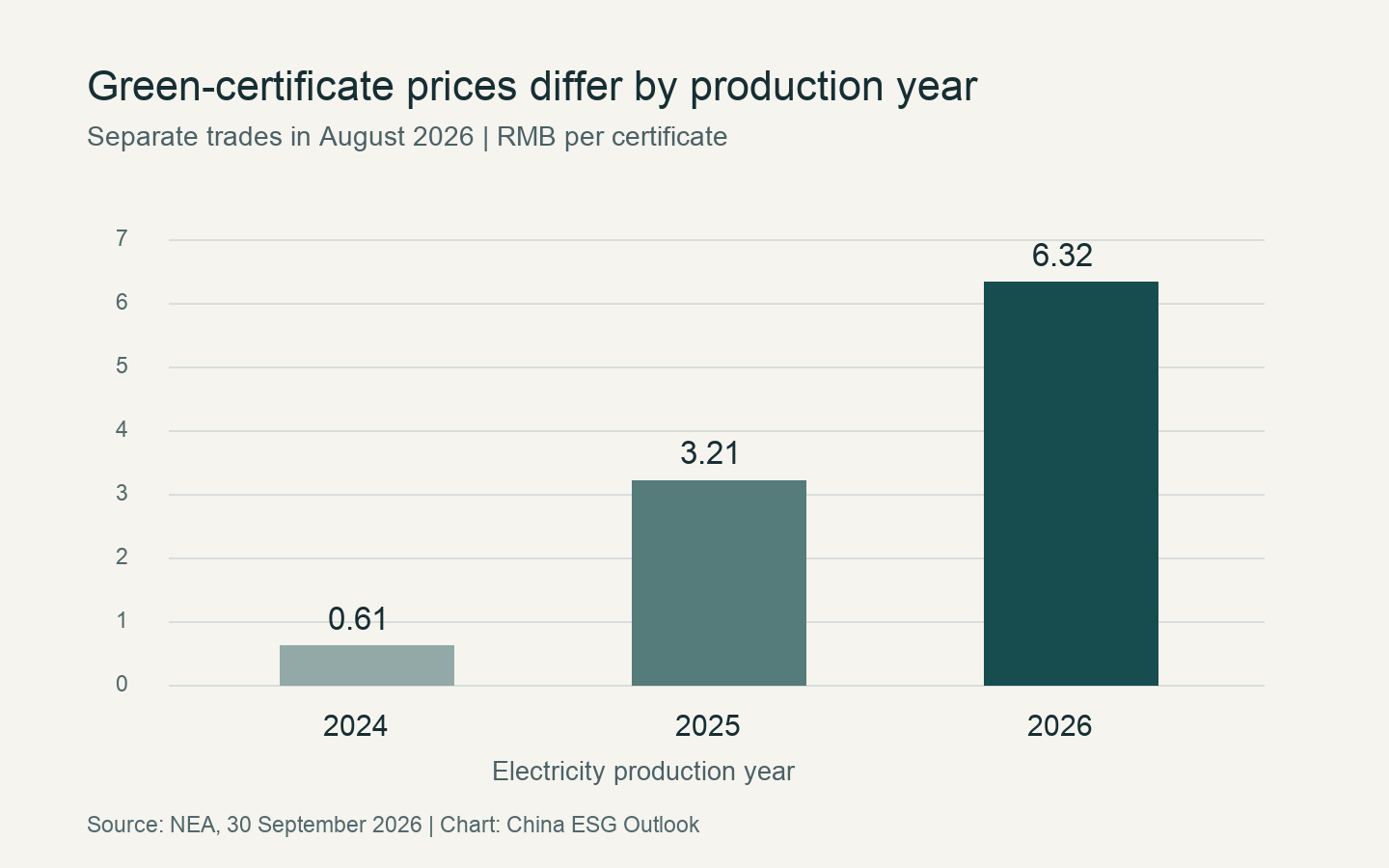
August prices differ sharply by electricity production year. Existing annual matching rules make claim eligibility a practical purchasing constraint, while the cause of the price spread remains uncertain.
A revised national rule makes watershed dispatch, emergency handoffs and inspection records central to hydropower safety, while retaining the existing 50 MW scope.
Coverage: 28–28 Sep 20264 min read
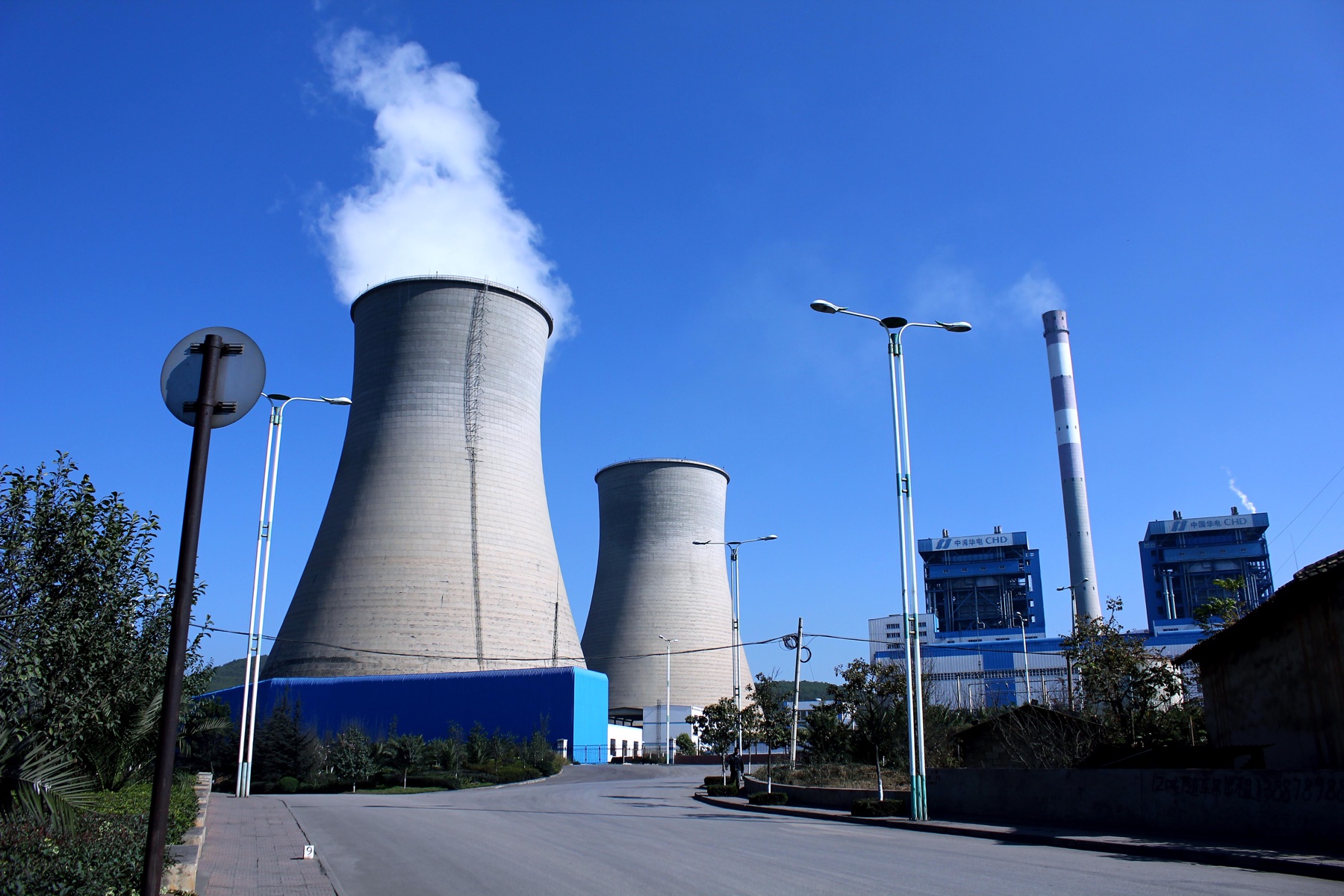
Kunming II power plant in Yunnan, China, photographed on 1 January 2012. Archive photograph (resized/cropped).Zhangmoon618CC BY-SA 3.0
A joint metrology-review exercise links instrument traceability with national ETS oversight. The immediate test is not a new carbon target, but whether companies can show how emissions data were produced.
Coverage: 22–23 Sep 20264 min read
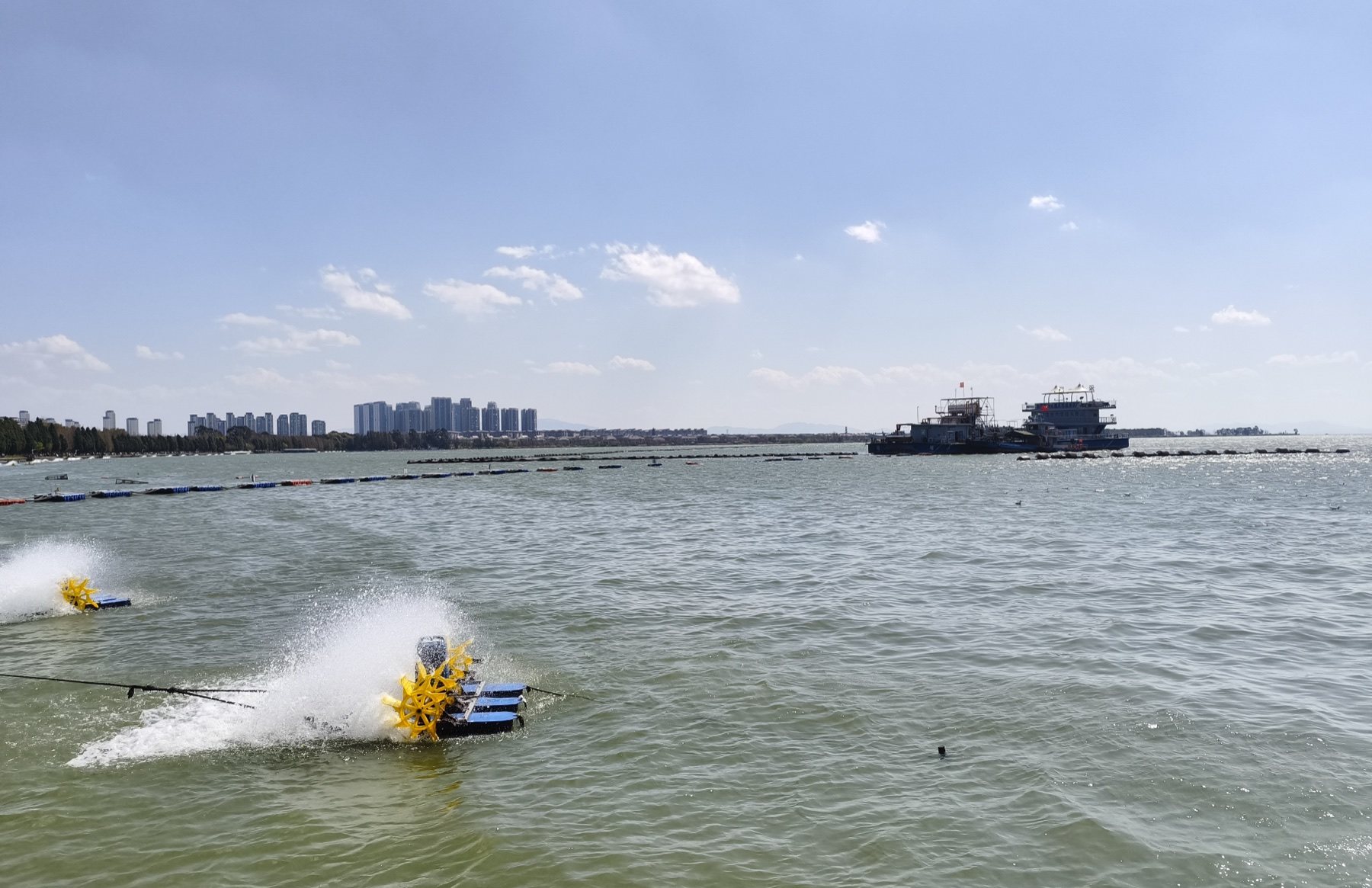
Dianchi Lake, Kunming, photographed on 22 February 2026. Archive photograph (resized/cropped).NggulsCC BY-SA 4.0
The Kunming Dialogue exposed the gap between national biodiversity plans and on-the-ground delivery. For companies, the next question is whether nature risk can be measured, financed and governed with the discipline increasingly applied to carbon.
China’s revised power-accident regulation moves safety governance toward prevention, wider grid participation and evidence that can survive an investigation.
Week of 7–13 Sep 20263 min read
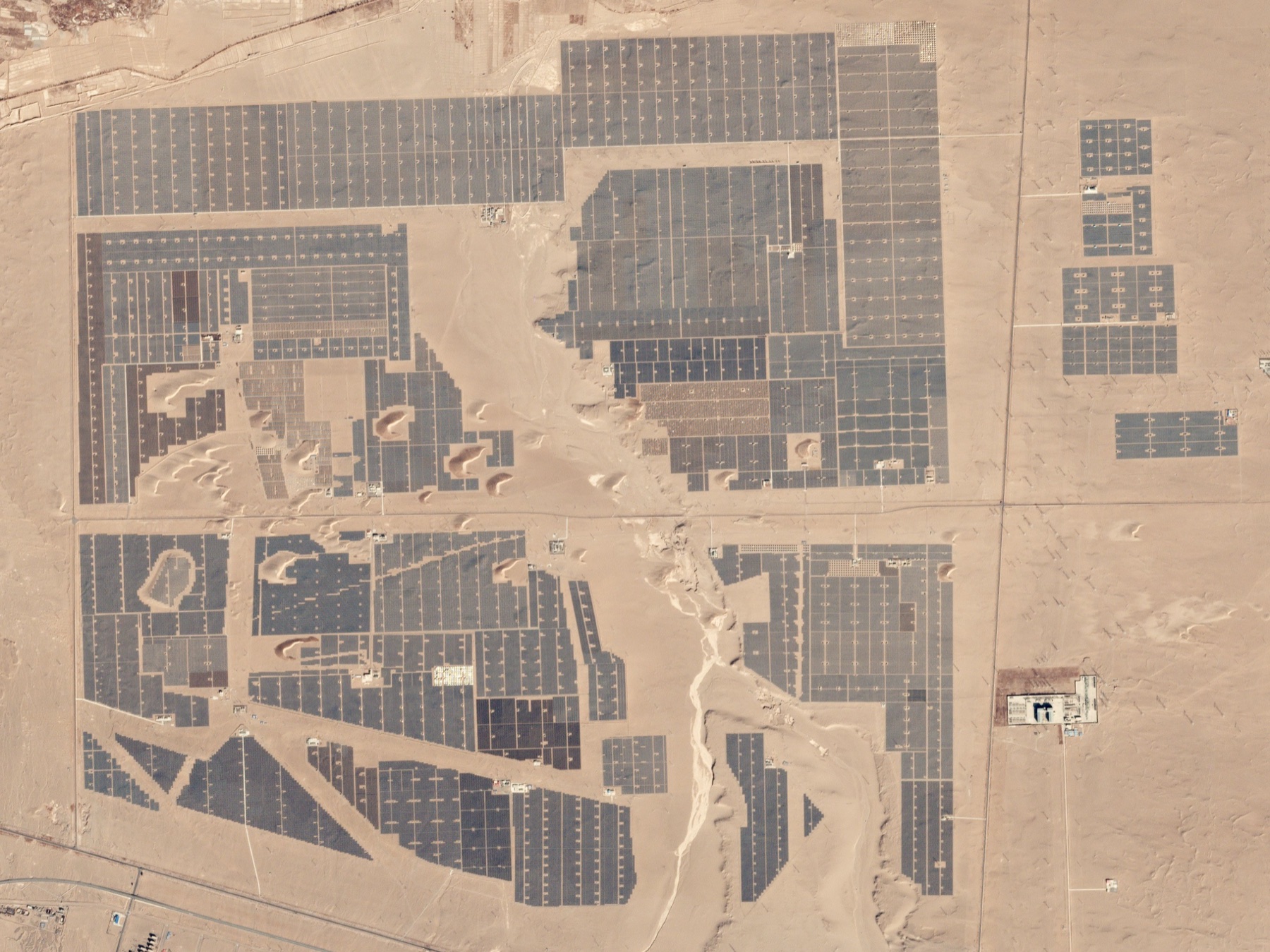
Solar farms near Golmud, Qinghai, seen by satellite on 30 January 2017. Archive image (resized/cropped).Planet Labs, Inc.CC BY-SA 4.0
New trading data show scale, but the harder corporate question is whether green power can be matched, traced and delivered in a form that changes production decisions.
A new opinion for state-owned coal enterprises puts technical authority, frontline reporting and protection from production pressure at the center of preventive safety governance.
Recognizing corporate sustainability planners as a new occupation signals that ESG capability is entering formal workforce policy—but a title alone does not guarantee decision authority or quality.
A Ministry of Ecology and Environment field visit linked straw use, biomass energy, soil protection, waste recycling and river-basin governance into one regional execution test.
The national ETS is no longer defined only by expansion. This week’s allocation notices put the operational burden—data, allowances, verification and investment choices—at the center of the transition.
The open question is no longer only what happened at a supplier. It is whether worker-grievance controls, buyer oversight and governance can withstand scrutiny when a dispute becomes public.
A renewed consumption tax is small in headline terms, but it makes technology choices and tax treatment more important across an already competitive battery supply chain.
A new practitioner survey points to a familiar challenge: demand for green-finance work is real, but the quality of implementation depends on skills and institutional support.
bne IntelliNews' report on renewable curtailment puts a hard number on the next phase of China's energy transition: 8.6% of solar output and 9.1% of wind output was curtailed in the first half of 2026, according to the National Energy…
Energy Connects' Aug. 25 report on PCG Power's planned trading platform points to a quiet but important change in China's renewable market. Developers are starting to look beyond the simple sale of generated electricity and toward forecasting,…
China Briefing's review of environmental compliance trends shows that the next ESG constraint is institutional capacity. The analysis points to an around 30 Mt CO2e emissions-reduction-capacity target through non-CO2 measures during the 15th…
Science and Technology Daily's Aug. 25 report on the new ecological protection plan matters because it treats restoration as a coordination problem. Six government authorities, including the Ministry of Ecology and Environment and the Ministry of…
The University of Hong Kong's Aug. 26 announcement about a new One Earth study puts the battery circularity debate in the right place: producer responsibility. The study, by researchers from HKU, Shandong University, the University of Maryland,…
Reuters' Aug. 26 report that China was preparing for more heavy rain from back-to-back storms is a concise but important physical-climate signal. The available evidence does not provide enough detail to state rainfall totals, damage figures or…
The week's most important China ESG signal was not another capacity headline. It was a reminder that the clean-energy buildout is now constrained by the system that has to absorb it. Reuters reported that China turned away enough clean energy to…
China's Ecological and Environmental Code matters because it changes how environmental policy is organized, not because it introduces a single flashy rule. According to the Aug 17 PRNewswire release, the code came into force on Aug 15 and brings…
China's coal policy is not disappearing; it is being tightened. Carbon Brief's Aug 20 briefing, together with related analysis of the 15th five-year coal plan, shows a more disciplined approach to the fuel that still anchors power security. The…
Electric vehicles remove tailpipe emissions, but they do not eliminate the environmental footprint of road transport. That point became sharper this week after EurekAlert reported a new national-scale source-to-receptor assessment of tire-derived…
China's renewables story is moving away from a simple utility-scale narrative. Carbon Brief reported that the 15th five-year plan for renewables calls for more than 300GW of distributed new energy over 2026-30, or about 60GW a year. The key…
China's latest oil and gas planning signals a managed transition, not an abrupt exit. Carbon Brief's Aug 20 briefing said the new plan focuses on energy security and peaking oil consumption in tandem with the gradual integration of lower-carbon…
The most important China ESG event this week was the release of the State Council's action plan for carbon peaking during the 15th Five-Year Plan period. Xinhua's report was short, but the numbers and timing are not. By 2030, China says carbon…
China's mandatory climate disclosure regime is now old enough to be judged by a practical question: does it improve governance, or does it mainly produce new reporting pages? The Oxford Business Law Blog's July 6 review frames the issue well.…
China's low-carbon logistics story became more concrete this week. Seatrade Maritime reported on July 6 that the country's first end-to-end zero-carbon sea-river intermodal container corridor entered operation, with the 10,000-tonne-class…
Typhoon Bavi pushed climate adaptation back into China's ESG agenda this week. Xinhua reported that the State Flood Control and Drought Relief Headquarters raised its emergency response for flood control and typhoon prevention in Zhejiang and…
China's solar industry is facing a new kind of policy pressure. PV Magazine reported that China has published three mandatory national standards covering energy consumption and efficiency across the photovoltaic value chain, from polysilicon and…
China's new energy vehicle market has reached the point where policy support is being rebalanced. CnEVPost reported on July 3 that plug-in hybrids, extended-range vehicles, battery electric commercial vehicles and fuel-cell commercial vehicles…
China's most important ESG signal this week was not a new technology announcement or another clean-capacity headline. It was procedural, but consequential: the State Council executive meeting chaired by Premier Li Qiang reviewed and approved an…
The Beautiful China plan released on Jul 3 is easy to dismiss as a slogan, but it should be read as a governance document. The State Council said the 2026-2030 plan sets overall requirements, targets, key tasks and major projects for advancing…
China's clean-energy story is entering a harder phase: the system must now absorb what it has built. The NDRC and NEA plan, highlighted again in the State Council's Jul 3 policy roundup, says China aims to basically establish a clean, low-carbon,…
China's sustainable finance regime is becoming more explicit about greenwashing. Green Central Banking reported on Jul 1 that the Asset Management Association of China has introduced inaugural disclosure guidelines for sustainability funds. The…
China's EV boom is creating a second industrial story: the battery afterlife. Caixin reported on Jun 30 that recycled critical metals supplied enough material in 2025 to meet more than a tenth of China's power-battery production needs. The report…
China-EU trade relations are usually discussed through friction: EV duties, overcapacity claims, market-access disputes and carbon border rules. This week's signal was more constructive, but still material for ESG risk. On Jul 2, China's Ministry…
China’s climate-finance story this week moved from the power sector into the factory gate. On Jun 15, Chinese state media reported a new three-year drive to cut energy use and carbon emissions in key industries. The indexed policy coverage…
China’s green-power transition is entering a pricing test. On Jun 18, the National Energy Administration reported that the 2025 China power market development report had been released and that a national unified power-market system has been…
China’s renewable buildout remains extraordinary. On Jun 18, the National Energy Administration cited the China Renewable Energy Development Report 2025 as saying that China’s renewable-energy additions reached a new historical high in 2025 and…
China’s climate transition is national in targets but provincial in execution. Carbon Brief reported on Jun 18 that China’s provincial-level governments have now published their 15th five-year plans for 2026–2030. Its search-indexed summary notes…
Europe’s Carbon Border Adjustment Mechanism is becoming part of China’s ESG story because it turns industrial emissions into a trade cost. On Jun 16, CSIS published analysis of China’s response to CBAM. Its indexed summary notes that under…
EV battery recycling is no longer just a waste issue. A Jun 17 World Economic Forum article framed recycling as a strategic industrial activity, noting that governments are reinforcing lifecycle-focused regulation and industrial policy. Its…
China’s green-energy transition is entering a less comfortable but more important stage. The easy headline is still capacity: more solar, more wind, more batteries and more visible industrial scale. The harder question is whether the system can…
China’s hydrogen story is becoming more local. Carbon Brief’s Jun 11 China Briefing highlighted provincial energy-plan signals that are more specific than national slogans. According to the indexed summary, Hunan calls for promoting hydrogen…
SNEC 2026’s most important message may have come from the floor plan. Cailian Press reported that storage-themed halls outnumbered PV cell and module halls, that pure-PV sellers had fallen sharply, and that many firms were repositioning as…
China’s May auto data point to a widening gap between domestic pressure and export momentum. Indexed summaries of CAAM’s Jun 10 release report that total auto production and sales in May were 2.616 million and 2.629 million units, down 1.2% and…
China’s green-power agenda is becoming industrial and local. Official interpretations of the Industrial Green Microgrid Construction and Application Guide 2026–2030 define industrial green microgrids as integrated systems that provide green…
The week’s power-system signals point to a broader ESG problem: green-power claims are becoming a data-governance issue. Reuters highlighted the changing role of coal as China’s green-energy drive advances. The CSEE forum highlighted curtailment,…
Focus event: on June 1, five Chinese agencies issued a trial guide for non-fossil energy electricity-consumption accounting, linking green-power transactions, green-certificate cancellation and 2026-and-later consumption statistics.
Focus event: the 19th SNEC International Solar Photovoltaic and Smart Energy Conference opened in Shanghai on June 2 amid industry losses, excess capacity and calls for a system-capability pivot.
Focus event: on June 2, Sina Finance reported on the State Council’s Urban Renewal 15th Five-Year Plan, which sets green and low-carbon transformation among six task areas and defines quantified renovation targets.
Focus event: on June 1, Sina Finance reported that China’s new-energy passenger-car exports in the first quarter reached 908,000 units, equivalent to 47.6% of domestic retail volume.
Focus event: on June 4, Sina Finance reported a UN University warning that global data-center electricity and water demand could double by 2030 as AI demand expands.
Focus event: Securities Times, citing China Securities Journal, reported on May 25 that the Shenzhen Stock Exchange had revised three ChiNext index methodologies, extending ESG negative-exclusion rules to ChiNext mid-cap, small-cap and broad mid-large-cap benchmarks from June 15, 2026.
Focus event: Xinhua reported on May 28 that MIIT convened the second meeting of the national NEV power-battery recycling task force and called for law-based regulation of retired-battery recycling.
Focus event: First Financial, republished by Sina Finance, reported that Southern Power Grid’s five-province service area hit a record 259 million kW load at 20:21 on May 25, nearly one month earlier than usual.
Focus event: BloombergNEF’s Energy Storage Market Outlook 1H 2026 summary, republished by Sina Finance on May 29, projected global non-pumped-hydro storage additions of 158 GW / 459 GWh in 2026.
Focus event: Xinhua reported on May 28 that Tibet’s clean-energy power capacity exceeded 13 million kW in 2025 and that clean energy accounted for more than 99% of power generation.
Focus event: Sina Securities reported on May 28 that Huadian Liaoning disclosed the limited financial impact of a 25 MW wind-powered off-grid hydrogen project after its share price surged sharply this year.
Focus event: On May 20, the NDRC and NEA issued NDRC Energy [2026] No. 688, expanding green-power direct connection from single-user projects to multi-user projects for industrial parks, zero-carbon parks and export-facing supply chains.
Focus event: Xinhua reported that eastern Inner Mongolia had signed more than 3bn kWh of staggered green-power trading contracts, using surplus cross-regional channel capacity to match renewable output with East China demand.
Focus event: On May 21, the MIIT Equipment Industry Development Center asked NEV producers to complete 2026 safety-hazard inspections covering batteries, assisted-driving systems, monitoring, after-sales service, accidents and safety-system self-checks.
Focus event: National Business Daily reported that NEV diagnosis-device restrictions and parts-key authentication are making independent repair difficult, pushing maintenance and insurance costs higher.
Focus event: First Financial reported that Sungrow signed a 7.5 GWh PowerTitan 3.0 energy-storage supply contract with Masdar for an Abu Dhabi project, plus 2.6 GW of inverters for the South zone.
Focus event: The NDRC and Ministry of Ecology and Environment announced that 2026 National Energy Conservation Week will run from June 15 to 21, with Low-Carbon Day on June 17 and a focus on carbon dual-control work in the 15th Five-Year Plan period.
Focus event: 21st Century Business Herald reported a new trillion-yuan grid investment cycle, with Q1 investment exceeding RMB 160bn and AI load adding pressure to renewable integration.
Focus event: Securities Times/Securities Daily reported that compute-power coordination is accelerating green-power business-model change after the AI-energy action plan.
Focus event: Xinhua reported April NEV sales share at 53.2%, while a follow-up Xinhua analysis said domestic NEV passenger-car sales share reached 61.4%.
Focus event: Securities Daily reported rising battery-scrap prices, fast listed-company entry and persistent disorder in power-battery recycling after a new management rule took effect.
Focus event: Securities Daily reported that all 427 companies required to publish 2025 ESG reports had done so by April 30, while voluntary standalone ESG reports reached 49% of A-share companies.
Focus event: the NDRC said the second 2026 batch of ultra-long special treasury-bond funding for equipment renewal had been allocated, including energy, transport, energy-saving and recycling projects.
Focus event: The National Energy Administration’s April 27 quarterly briefing showed rapid renewable expansion and forthcoming policies on consumption and green-power direct connection.
Focus event: At the April 27 NEA briefing, officials said they would improve green-certificate pricing, study a price index and clarify how green certificates enter carbon dual-control and carbon accounting.
Focus event: China Securities Journal reported on April 27 that listed banks used their 2025 ESG reports to disclose transition-finance practices in coal power, shipping, steel, aviation and buildings.
Focus event: The April 30 ESG reporting-season analysis highlighted supply-chain emissions in the storage sector, including an estimate that CATL’s supply-chain emissions were more than five times its core operational emissions.
Focus event: the State Council service-sector opinion called for carbon-rights collateral finance, financial-institution participation in carbon-market trading, carbon insurance and carbon-neutrality bonds.
Focus event: Xinhua reported National Energy Administration data showing China’s installed power capacity reached 3.96 billion kW by end-March, with solar at 1.24 billion kW and wind at 660 million kW.
Focus event: the European Commission’s active CBAM materials now show the 2026 definitive regime, the 50-tonne threshold and the first quarterly certificate price table.
If you looked for a blockbuster China ESG policy headline last week, you could easily conclude that not much happened. That conclusion would be wrong. Week 16 was not a no-signal week; it was a different-signal week. The center of gravity moved…
ICAP’s 2026 status report, released on April 14, is the strongest hard-number event of the week. The report states that 41 emissions trading systems are currently in force, covering 26% of global greenhouse gas emissions, and that ETS revenues…
The EU’s CBAM page now reads less like a policy primer and more like an implementation portal. It reiterates that the definitive regime started from 1 January 2026 and specifies practical mechanisms: importers above the 50-tonne threshold must…
On April 16, Bilibili announced it filed its annual report on Form 20-F for FY2025 with the U.S. SEC. This is routine in one sense, but routine does not mean low signal. In ESG analysis, filing events are often more informative than thematic…
Zhihu disclosed on April 17 that it filed its FY2025 Form 20-F with the SEC, and in adjacent communication it published its 2025 ESG report with both Chinese and English versions. By your hard filter, an ESG publication headline alone is not…
On April 16, Yiren Digital announced inclusion in the S&P Global Sustainability Yearbook (China Edition) 2026 and Industry Mover distinction. The release includes concrete numbers: CSA score of 50 out of 100, top-decile ranking in its industry…